
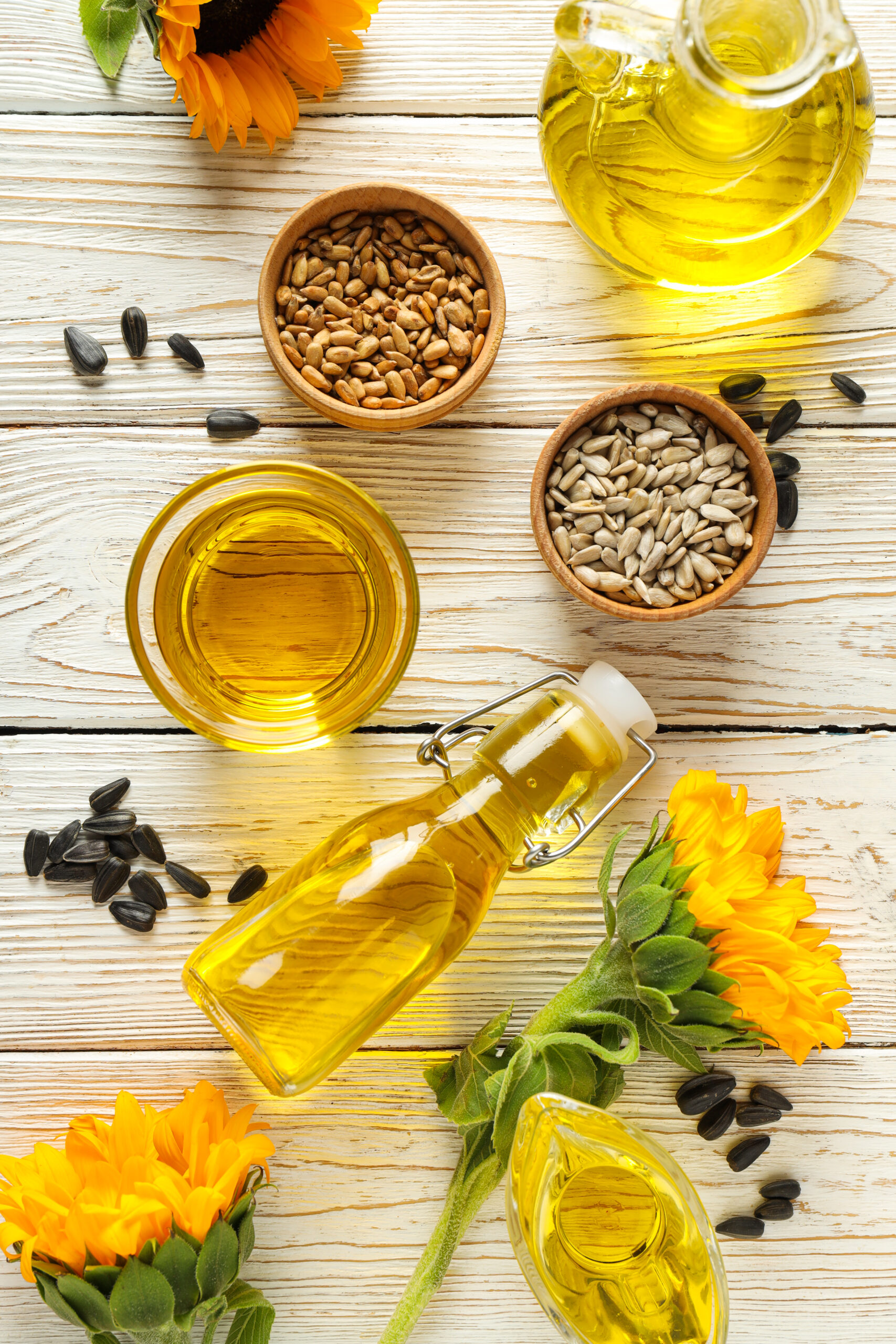
If you have any social media presence, you will have seen that nowadays seed oils are basically a nutritional equivalent to rat poison. Half of the internet says seed oils are the reason why you are tired, inflamed, and are going to shave years off your lifespan. But how did ordinary cooking oils end up being the bad guys? And is there any scientific proof to back these claims or is it just another round of food fearmongering?
What are seed oils?
The so called “hateful eight” includes canola, corn, cottonseed, grapeseed, rice bran, safflower, soybean, and sunflower oils. These seed oils are vegetable oils made from seeds. Olive oil and avocado oil, on the other hand, are made from the actual fruit (yes, both olives and avocado are fruit!). Seed oils are high in polyunsaturated fatty acids (PUFAs), particularly omega-6 fats like linoleic acid. Cue the fearmongering.

So why the hate?
Claim 1: Seed oils cause chronic inflammation
Some argue that more omega-6 → more arachidonic acid → more inflammatory compounds → disease.
Is there any truth to it?
No.
Numerous studies have now shown that omega-6 does not raise inflammatory markers:
- a systematic review of 15 randomized controlled trials found that increasing linoleic acid intake did not raise inflammatory markers like CRP, IL-6, or TNF-α*;
- a meta-analysis of 30 randomized controlled trials (over 1,300 participants) concluded that raising omega-6 intake had no effect on systemic inflammation**.
Claim 2: Seed oils are bad for heart health
The argument is that our cardiovascular health suffers due to the inflammatory nature of seed oils.
Is there any truth to it?
No.
There is sufficient evidence to prove that replacing saturated fat with PUFAs in seed oils actually reduces the likelihood of cardiovascular diseases.
- a meta-analysis of 8 RCTs found that replacing saturated fat with PUFAs reduced coronary heart disease events by ~19%***.
Claim 3: the omega-6 / omega-3 ratio makes seed oils dangerous
Some argue the ideal ratio is 1:1 and not 15:1 or higher which is common in Western diets.
Is there any truth to it?
Some.
It is true that most people have a much higher concentration of omega-6 relative to omega-3. One could also, based on limited evidence, link high plasma omega-6:omega-3 to diseases and higher mortality****.
However: raising omega-3 intake (fish, flax, walnuts) and lowering the ratio appears more effective than demonizing omega-6. Reviews conclude that absolute omega-6 intake is not harmful on its own, and the real problem is too little omega-3. Therefore, instead of cutting out seed oils, it is more beneficial to start eating more fish, nuts and seeds, in order to even out the ratio.

Claim 4: processing seed oils makes them toxic
Haters claim seed oil processing (use of hexane while making seed oils) and high temperatures cooking, make them unsafe.
Is there any truth to it?
Some.
Regulators tightly control food-grade processing. Solvents such as hexane are removed during processing and do not pose a health risk as the levels found in the final product are far below safety thresholds.
Having said that, although processing seed oils does not inherently make them unsafe, very high heat cooking and especially reheating (in some restaurants and industrial deep fryers, for example), does build up toxic compounds. But this does not apply to cooking at home at normal temperatures. So you can go ahead and fry your eggs using seed oils without fear.
Verdict:
Seed oils are not plotting your downfall. The narrative stuck because it’s simple and dramatic (“Seed oils will kill you!”), unlike the nuanced scientific reality.
It is not the seed oils that’s the problem. It’s how they are sometimes used: in ultra-processed foods and by being reheated multiple times in some restaurants. Using them at home is not a problem. Current science fully supports you drizzling some sunflower oil on your salad and recommends you to eat more fish and nuts to even out the omega-6:omega-3 ratio.
Final thought: many seed oil haters suggest using animal fats (tallow, butter, lard) as “better” fat sources but there is evidence to suggest those are worse for your health. Therefore, if you do want to avoid seed oils, just go for olive oil instead. It’s the one fat that earned its reputation through decades of data, fewer debates and broad consensus.
Comments are closed