
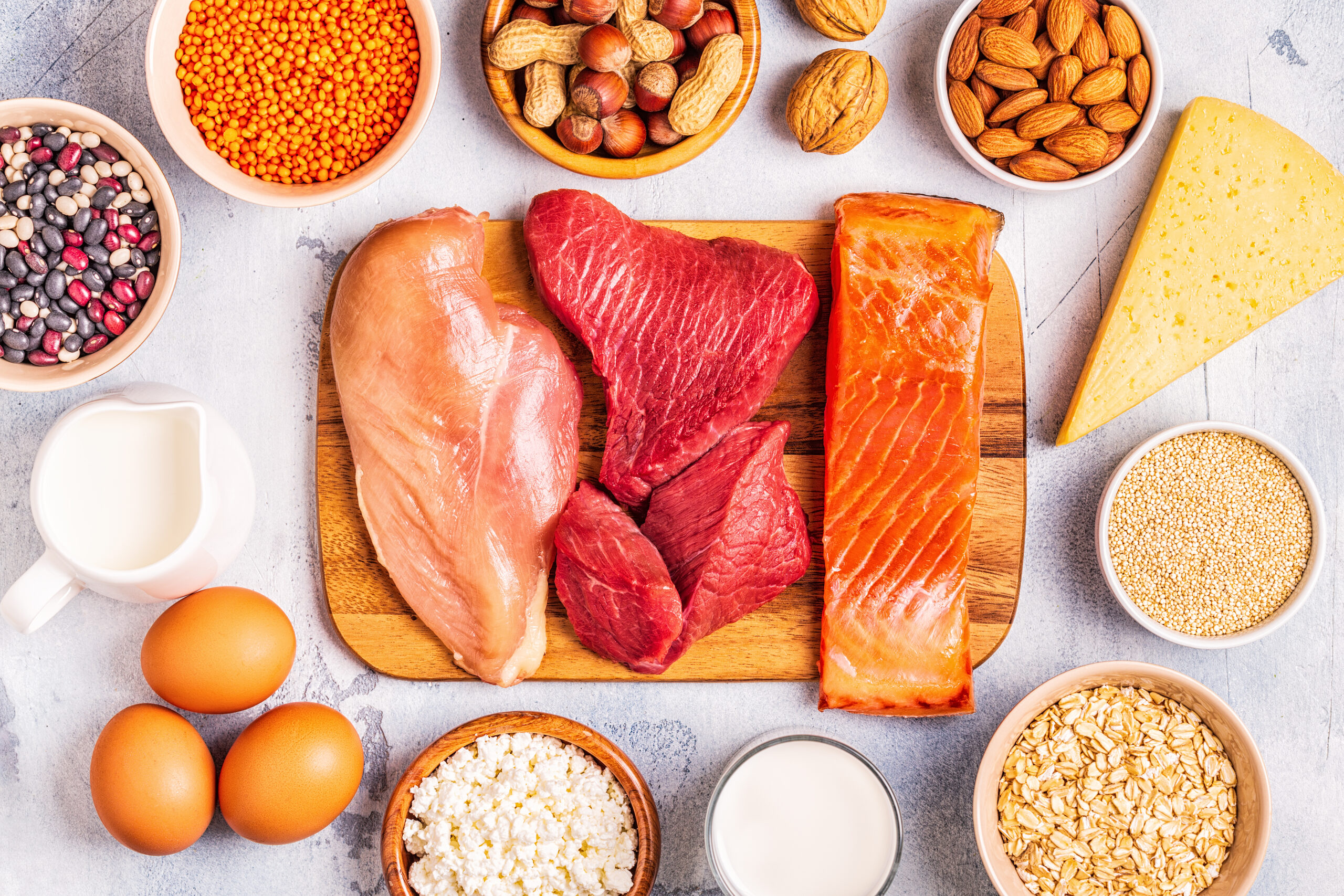
Protein is all the hype at the moment, whether you’re trying to build muscle, lose fat or just survive another meeting without a post-lunch crash. But how much do we really need to be healthy and optimize muscle growth? And how much is too much? I researched current evidence so that you know whether you actually need to chug those protein shakes.
Let’s start with the basics.
Protein is one of three main macronutrients, alongside fat and carbohydrates. It is not just for gym bros, every single person needs it for every cell in our bodies. Hair? Protein. Enzymes? Protein. Teeny tiny “Lego pieces” called amino acids, when combined together, form proteins and build muscles, skin, organs and create enzymes, hormones and more.
There are 20 different types of amino acids and 9 of them are essential. They are called “essential” because our bodies do not make these and we need to get them from food.
There are two main types of protein in food:
Animal source: the ever-so-popular chicken breast, as well as other meats and fish, plus eggs and dairy.
Plant source: legumes (peas, beans and lentils), wholegrains, and soy products such as tofu and tempeh.


How much is too much?
For those minimally active, the Recommended Dietary Allowance (RDA) for protein is:
0.8 grams per kg of body weight (BW)
So if you weight 60kg, the RDA is 48g of protein per day.
However, this figure was achieved through studies aimed to avoid a nutritional deficiency*, rather than to promote optimal health. Therefore, we should treat this number as a minimum.
In order to promote optimal health and physical strength, studies recommend the following**:
Minimally active individuals: 1g per kg BW
Moderately active individuals: 1.3g per kg BW
Very active individuals: 1.6g per kg BW
Athletes: up to 2g per kg BW
Additionally, certain groups of people should also look to consume higher than the baseline 1g per kg BW. Such groups include adults over 65 years old***, women in peri- and post-menopause stage****, as well as women who are pregnant or breastfeeding*****.

Potential side effects of overconsumption:
- People who eat high-protein diets rich in animal sources usually get less fiber (if you’re skipping fruits, veggies, and whole grains), which can reeeeallyyy slow things down (IYKYK) and negatively affect gut health;
- It may cause unnecessary stress on your kidneys in the long term;
- If you are getting excessive protein mostly from animal sources, your long-term health may suffer as your cholesterol levels may increase. And don’t even get me started if your main protein source is steak as that’s a sure way to increase your risk of developing various heart diseases! ******
- In some cases, excessive consumption may give people stinky breath due to increased ketone production (especially on very low-carb diets).
So, in summary, overconsumption is not only unnecessary but may even be harmful when practiced for a prolonged period of time.
A final word on protein.
Many people are obsessed with eating enough protein although statistics shows that the vast majority of people in developed countries get enough or more than enough from their normal diet. A far more concerning statistics is that around 90% (!!) of people in the developed world have a fiber deficiency. So instead of focusing on protein, I say we switch our primary focus to fiber.
** Dietary protein intake and human health – PubMed
*** Protein Consumption and the Elderly: What Is the Optimal Level of Intake? – PMC
**** The Importance of Nutrition in Menopause and Perimenopause—A Review – PMC
***** Nutrition Recommendations in Pregnancy and Lactation – PMC
Comments are closed