
For years, fat was public enemy #1. Low-fat everything filled grocery stores around the world. But now the pendulum has swung. Suddenly, high-fat diets are “in,” all your friends are going keto, and you see Instagram influencers doing olive oil shots. So… let’s examine the science to answer the all-important question: “Does fat actually cause weight gain?”
The basics: what are fats?
Dietary fat is one of the three main macronutrients (along with carbohydrates and protein). It’s dense in calories, at 9 calories per gram, compared to just 4 calories per gram for carbs or protein. But it is also essential: it gives you energy, protects your organs, helps absorb vitamins (A, D and E) and keeps you feeling full.

The main types of dietary fats are:
1. Unsaturated Fats (the healthy kind)
- Monounsaturated fats (MUFAs)
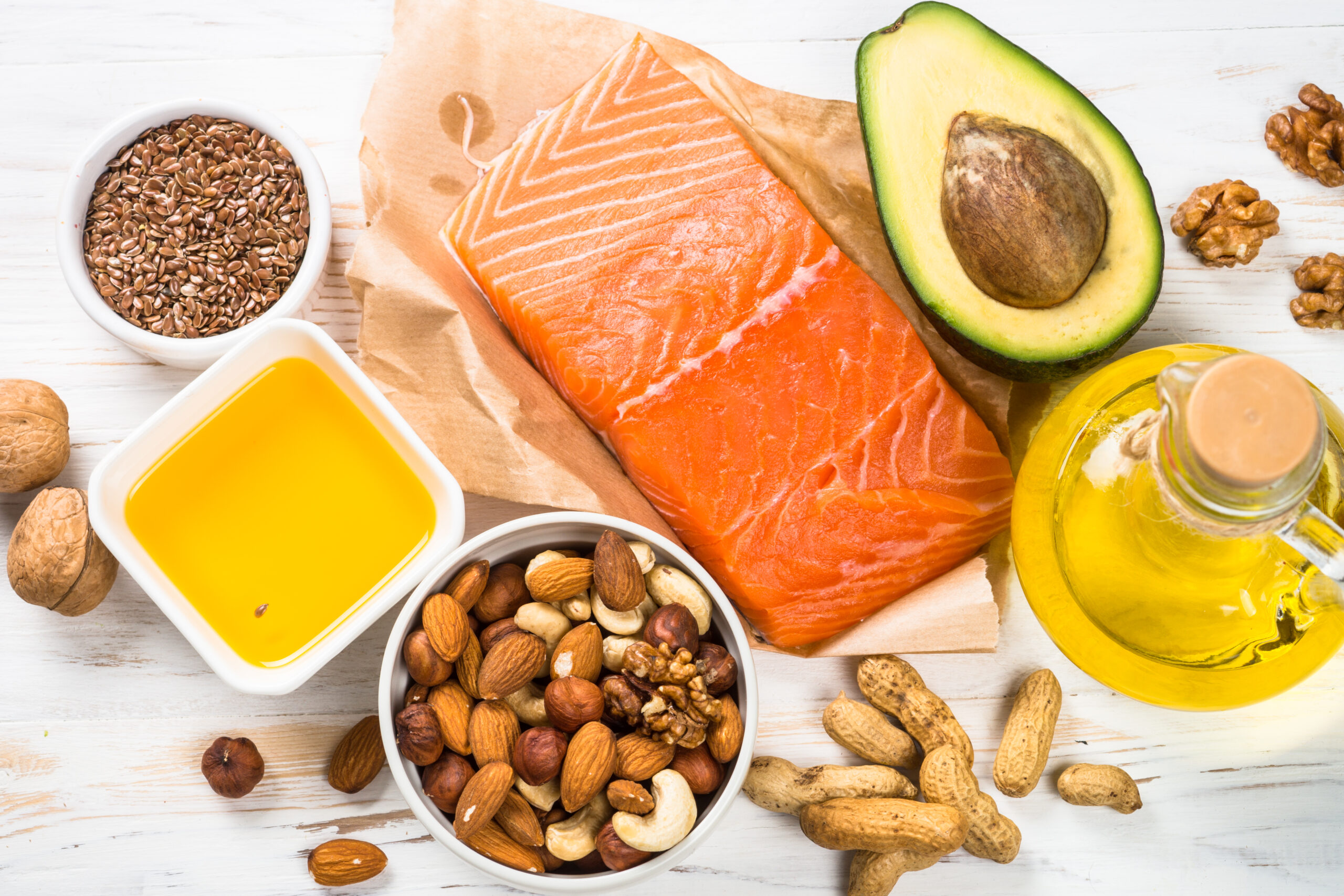
Found in olive oil, avocados, nuts: good for heart health and reducing inflammation. - Polyunsaturated fats (PUFAs)
Found in fatty fish, flaxseeds, walnuts: supports brain function, heart health, and hormone balance.
2. Saturated Fats (use in moderation)
- Found in red meat, butter, cheese, coconut oil.
3. Trans Fats (avoid!)
- Found in some deep fried and processed junk foods.
What the Research Shows
A study in The New England Journal of Medicine found that calorie intake, not fat specifically, is the key driver of weight gain*. In other words, you gain weight when you eat more calories than you burn, regardless of whether they come from fats, carbs, or protein.
Similarly, another study found that weight loss occurred when individuals restricted their calorie intake, regardless of which macro they emphasized**.
Other studies showed similar results, leading to the conclusion that it is not actually fat that’s to blame, it’s excess calories.
Plot twist: higher-fat diets can even support weight loss!
Yep. Diets higher in fats, like the Mediterranean diet, have consistently shown not only health benefits but also help with weight control.

A meta analysis of 16 randomized controlled studies has concluded that the Mediterranean diet can be very helpful with weight loss***, especially when combined with calorie restriction. This kind of diet includes such fat sources as olive oil, fish, nuts and seeds. This settles any objections about the relatively high fat content of the Mediterranean diet.
So why do people still think fats are bad?
Because of its high calorie content. It’s easier to overeat calories when they’re packed into fatty, rich foods, especially when paired with sugar or salt (looking at you, burger and fries!). But fat itself isn’t uniquely fattening. In fact, the right type of fats (nuts, seeds, olive oil and fatty fish) will help you manage your hunger, your cravings and your weight.
VERDICT:
Fat doesn’t make you fat. Eating too many calories does.
And high-quality fats can actually help you feel full and even lose weight when controlling caloric intake.
So embrace healthy fats. Just don’t confuse a spoonful of peanut butter with a license to eat the whole jar.
*** Mediterranean diet and weight loss: meta-analysis of randomized controlled trials – PubMed
Comments are closed